


4 Classifications of Muslim-Friendly Restaurants in Korea
If you are a Muslim living in Korea or planning a trip, it's good to know the differences between Halal Certified, Self Certified, Muslim Friendly, and Pork-Free when choosing a restaurant. This guide easily explains what each of these four classifications means and what you should personally check.
Are you a Muslim preparing for a trip to Korea or currently residing there? If so, you've probably wondered at some point when choosing a restaurant, 'Is this really a place where I can eat with peace of mind?' You might come across welcoming terms like 'Halal,' 'Muslim Friendly,' or 'Pork-Free' at restaurant entrances or in reviews. While they might all seem similarly safe at first glance, these four expressions actually carry different meanings. Some places might have official certification standards, while others might simply mean they don't use pork. Therefore, rather than making a hasty judgment based on a single word, it's important to know in advance what each classification precisely means. We'll clearly explain the four restaurant classification methods you should know to dine comfortably in Korea.
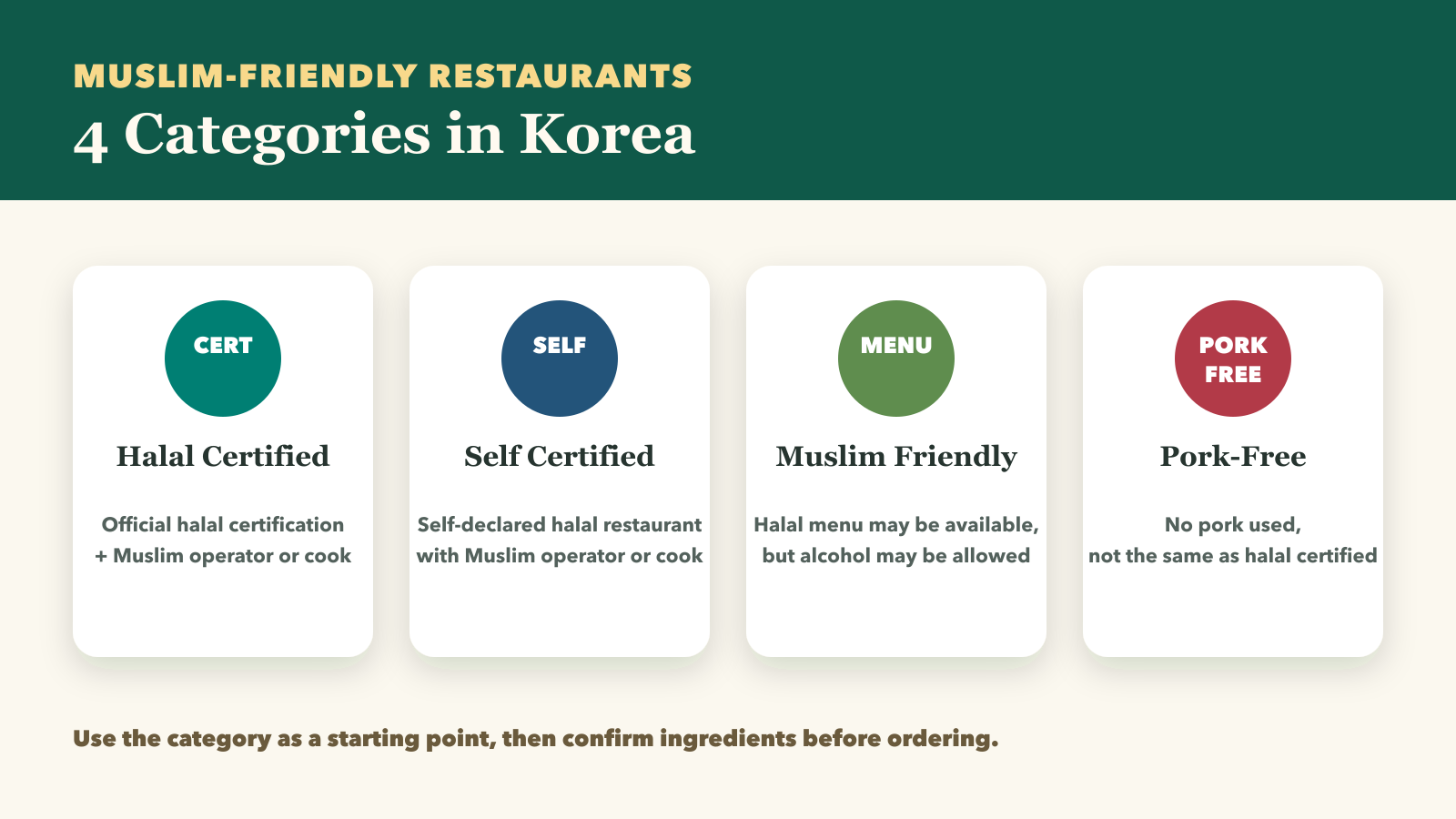
1. Halal Certified (Officially Halal Certified Restaurant) This is the most stringent and clear classification among the four. It refers to restaurants that have received Halal certification from an official institution recognized by the Ministry of Food and Drug Safety, and are operated or cooked by Muslims themselves. If a restaurant is indicated as Halal Certified, you can understand that official certification is an important criterion. However, whether the entire restaurant is within the scope of certification or if only specific menu items are covered may vary by establishment, so it's good to double-check before visiting. 2. Self Certified (Self-Declared Halal Restaurant) As the name suggests, these are places where the restaurant itself states, 'We cook according to Halal standards.' They may be introduced as restaurants with Muslim operators or chefs, but they should be distinguished from Halal Certified establishments that have undergone official institutional certification. Even without an official certification mark, they might operate respecting Halal standards, so you can feel more at ease by directly asking what ingredients they use and if there are any specific items on the menu that need verification. 3. Muslim Friendly (Muslim-Friendly Restaurant) These are restaurants that may offer some or all Halal menu items out of consideration for Muslim guests. However, it's crucial to note that in this classification, alcoholic beverages or alcohol may be permitted. Therefore, you should not assume that the entire establishment is a completely Halal environment just because it's labeled 'Muslim Friendly.' When ordering, double-check if sauces or cooking processes involve alcohol. 4. Pork-Free (Pork-Free Restaurant) This literally means that pork is not used. While this is useful information for Muslims, the absence of pork does not automatically make it a Halal restaurant. This is because this term alone does not provide information about sauces, broths, seasonings, alcohol content, or cooking utensil usage. If you visit a Pork-Free restaurant, it's advisable to inquire more thoroughly about the ingredients and cooking methods.
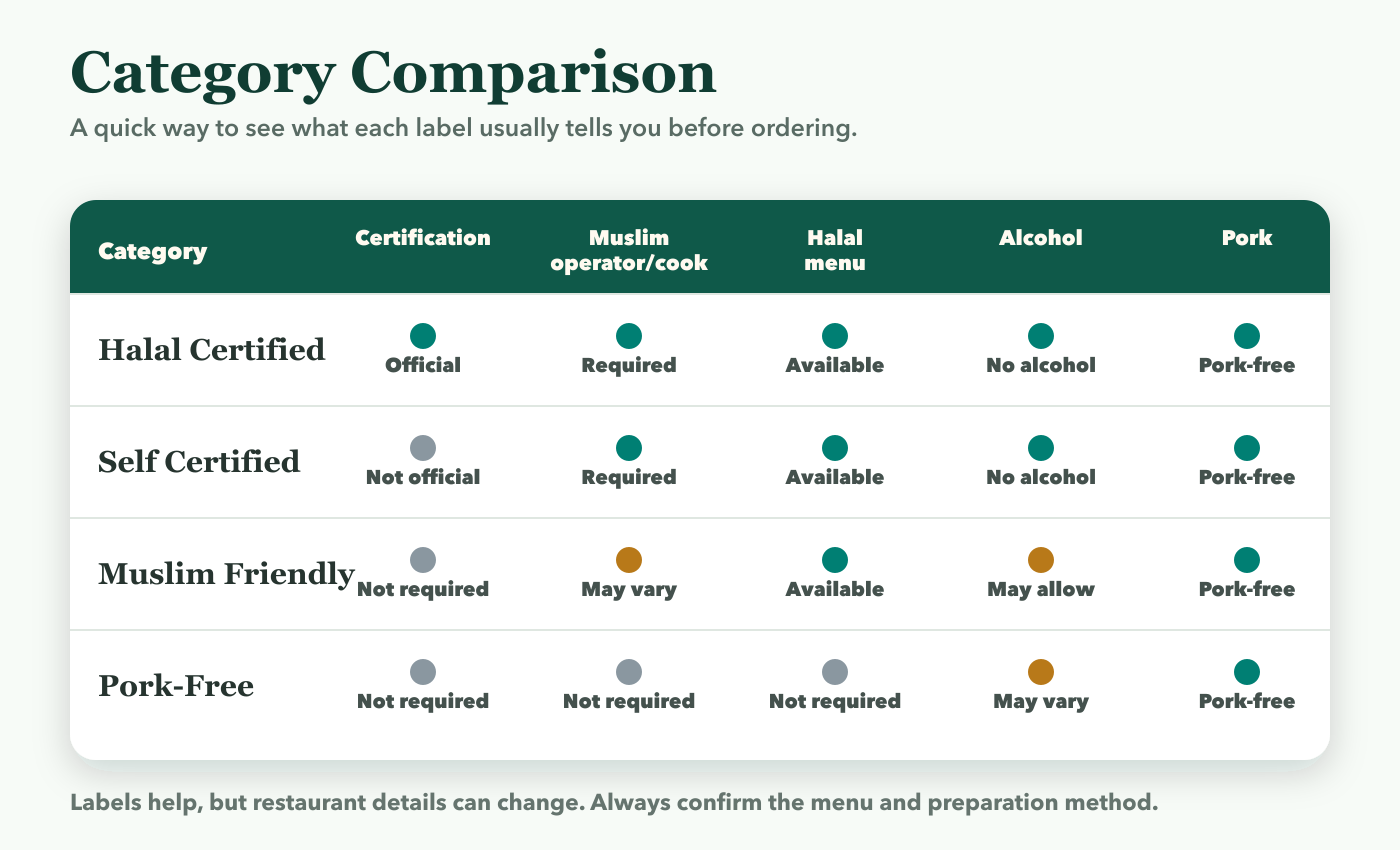
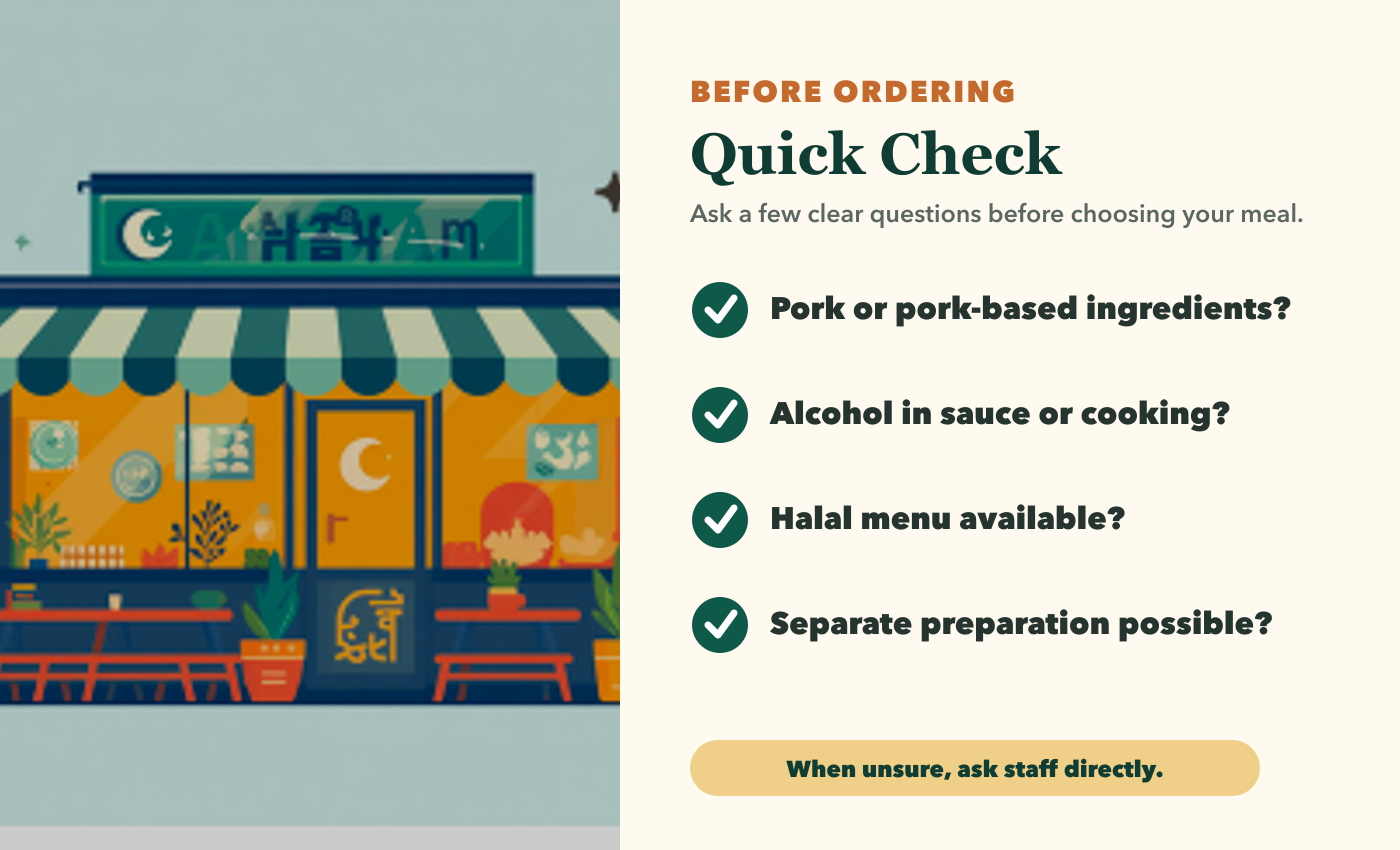
The most easily confusing points, remember these: Many people confuse Halal Certified and Self Certified. Both classifications may include criteria related to Muslim operators or chefs, but the biggest difference is the presence of official certification. Self Certified is a form where the restaurant itself guides on Halal standards, so it should not be considered the same as a credible certification mark. Also, the term 'Muslim Friendly' can lead to misunderstandings if interpreted broadly. It means there might be menu options for Muslim guests, not that the entire establishment operates under 100% the same standards. Since alcoholic beverages can be sold alongside, if you wish to avoid seasonings or cooking processes that contain alcohol, confirmation is needed before ordering. Especially 'Pork-Free' needs to be viewed with more caution. While the fact that pork is not used is certainly important information, it alone cannot qualify a restaurant as Halal. Aspects that can affect your meal, such as sauces, broths, seasonings, alcohol, and cooking utensil usage, need to be checked separately. The most important fact is that these four labels are not kindly displayed on every restaurant door. Online information might be outdated, or menus might have changed. So, when you arrive at a restaurant, don't hesitate to ask the staff specifically: 'Does this menu contain pork-derived ingredients?' 'Does the sauce or cooking process contain alcohol?' 'Are there separate Halal menu options?' Communicating directly and confirming in this way is the most reliable and reassuring method.
In conclusion, when looking for Muslim-friendly restaurants in Korea, please remember that while the four labels—Halal Certified, Self Certified, Muslim Friendly, and Pork-Free—may seem similar on the surface, the scope they actually guarantee is different. Regardless of how a restaurant is labeled, developing the habit of asking and reconfirming the ingredients and cooking methods of the food you ultimately consume will make your dining experience in Korea much safer and more comfortable. Don't wander around searching for restaurants anymore. If you're curious about a list of Halal restaurants and detailed information in Korea, feel free to check the link below: https://myhallie.com/en/halalrestaurants/